
A good prototype
is the beginning.
Make it work.
Move from a convincing idea to something people can rely on. Connect the product decisions, the experience and the technical work.
Talk about the next step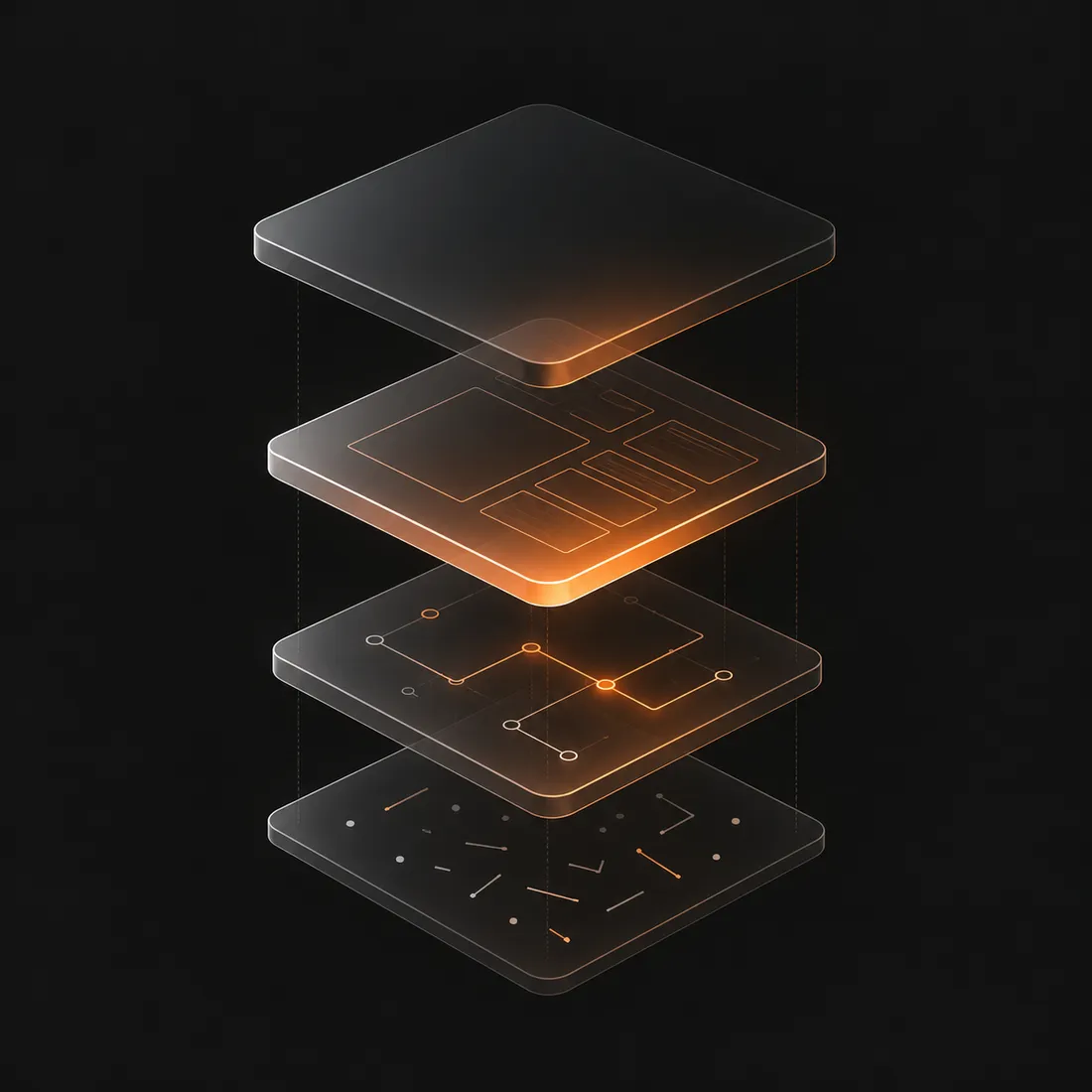
The business goal, the people involved and the constraints that matter.
Product decisions, journeys and interfaces that make the idea tangible.
The right tools, information and controls, working together.
A useful release, tested with people and improved through use.
There is more to a product
than the screen.
The layers underneath determine whether a useful idea becomes a usable system. Explore the work that connects them.
A product people can understand
Clear journeys, helpful states, accessible interactions and feedback when something goes wrong.
A reliable foundation
Decisions about the data model, backend, integrations and where information belongs. Technical choices need to fit the product and its constraints.
The right people, the right permissions
Authentication, appropriate access, responsible data handling and clear boundaries for AI and integrations.
A usable release, not just a good demo
Meaningful testing, failure handling, deployment checks and a plan for who owns the system after launch.
Improve what people actually use
Observe real use, gather feedback and prioritise improvements. Agree what support and maintenance the product needs.
Close the gap between
“it works” and “we use it”.
Keep the prototype’s learning, then address the conditions of real use.
A promising prototype
- A core idea made tangible.
- A demonstration of the main journey.
- Early feedback and important questions.
- A way to decide what to invest in next.
A useful working product
- Clear access, data and ownership.
- Real inputs, errors and edge cases.
- Connected workflows and meaningful tests.
- Deployment, feedback and appropriate support.
The details that
make it usable.
Build around the way the product will actually be used, not just the conditions of a demo.
01The everyday experience
Empty states, loading, errors, responsive behaviour and accessible interactions need as much thought as the happy path.
02The connected system
Data modelling, backend architecture, authentication and integrations need to fit the product, its users and its constraints.
03Checks that mean something
Test important journeys, permissions and failure cases. AI-enabled behaviour needs evaluation against the tasks and risks involved.
04A release someone can own
Verify the deployed experience. Make support, maintenance and the next improvement loop explicit rather than treating launch as the finish line.
Product leadership,
close to implementation.
I shape the product, design the experience, work through architecture and delivery decisions, and direct implementation using modern AI-assisted development tools.
The scope determines the specialist input, technical review and ongoing support the product needs. Agree responsibilities early, so there is a clear owner for each part.
See my contribution to AudaHave a problem
worth solving?
Whether you’re exploring an idea, improving a process or figuring out where AI fits, I’d be happy to talk.